
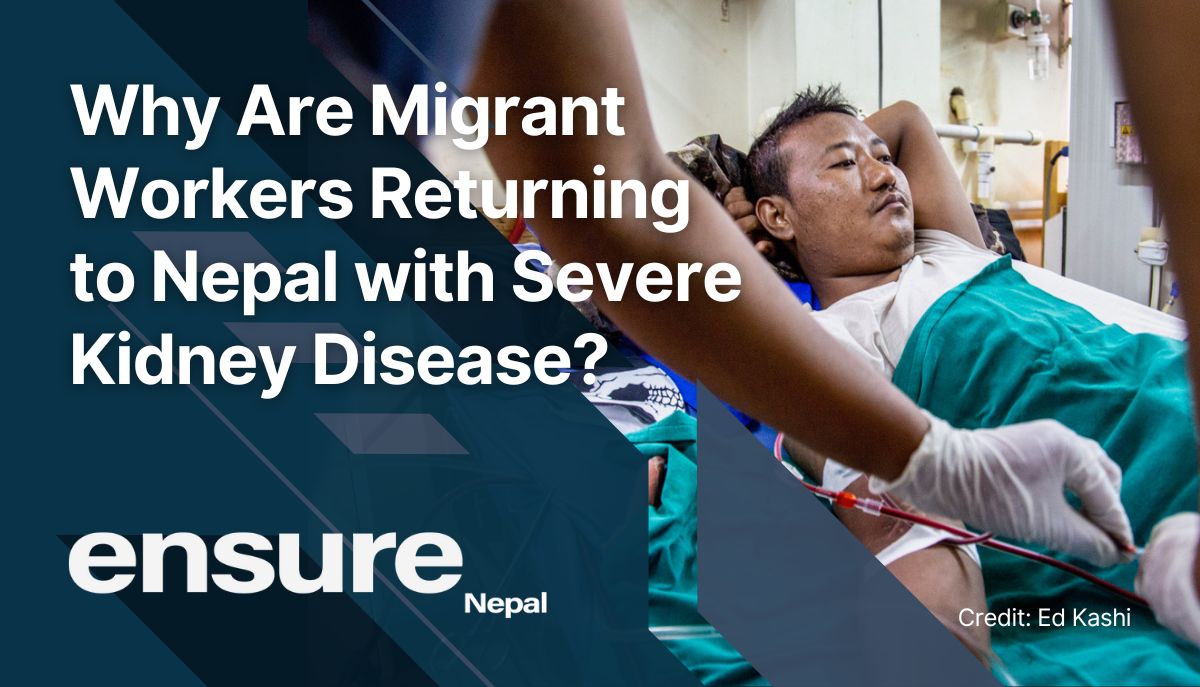

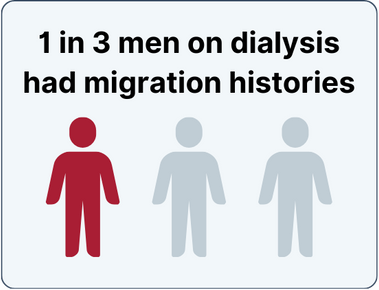
Trabalhadores migrantes nepaleses estão retornando de regiões quentes como o Oriente Médio com doenças renais, necessitando de diálise em idades anormalmente jovens em comparação com os não migrantes. Uma pesquisa com pacientes em diálise no Nepal revelou que Um em cada três pacientes do sexo masculino tinha histórico de migração..
Este estudo corrobora dados anteriores Dados coletados por La Isla Network em 2023 mostraram que 31% dos pacientes em dois grandes centros de diálise em Katmandu eram migrantes retornados e que 50% desses migrantes retornados tinham menos de 40 anos quando seus rins falharam. Ambos os estudos fazem parte de ENSURE-Nepal, um projeto de saúde ocupacional liderado pela La Isla Network em colaboração com a Nepal Development Society (NeDS), o National Kidney Center Nepal, a Universidade de Gotemburgo e a Universidade Johns Hopkins.
Os dados do projeto ENSURE-Nepal corroboram outros estudos realizados globalmente. apontando para crises emergentes de saúde pública consistindo em lesão renal ocupacional induzida pelo calor. A crise semelhante surgiu na Mesoamérica em meados dos anos 2000, o que o La Isla Network mitigou em grande parte graças a Centro de Excelência Adelante.
O calor excessivo é um problema emergente de segurança e saúde ocupacional (SSO) que exige soluções inovadoras que não só protejam os trabalhadores, mas também salvaguardem a economia. A Organização Internacional do Trabalho (OIT) estimativas que 2,41 bilhões de trabalhadores estão expostos ao calor excessivo, o que corresponde a 71% da população economicamente ativa mundial. Todos os anos, o calor excessivo resulta em 22,85 milhões de ferimentos e 18.970 mortes no trabalho.
Além disso, em 2020, havia 26,2 milhões de pessoas vivendo com doença renal crônica atribuível ao calor excessivo no local de trabalho em todo o mundo, o que representa aproximadamente 31,7 milhões de todos os casos de doença renal crônica.
Agora, os resultados do projeto ENSURE-Nepal apontam para uma crise semelhante emergindo no Oriente Médio e no Sul da Ásia.
Neste novo estudo, foram identificados três grupos principais de pacientes do Centro Nacional de Nefrologia em Katmandu. O primeiro grupo era composto por migrantes que retornaram do exterior, diagnosticados com doença renal e que iniciaram a diálise ainda na faixa dos 30 anos. O segundo grupo era formado por migrantes que retornaram do Nepal, diagnosticados no exterior e que iniciaram a diálise na faixa dos 40 anos. O último grupo era composto por pessoas sem histórico de migração, que iniciaram a diálise em meados dos 50 anos.
Kristina Jakobsson, autora principal do estudo e pesquisadora sênior da Universidade de Gotemburgo, afirmou: “Esse padrão sugere fortemente a presença de lesões renais agudas ou de progressão muito rápida entre os migrantes. Suspeitamos que o estresse térmico seja um importante fator de risco e agora estamos investigando isso com mais detalhes em estudos mais abrangentes.”
A diretora executiva da NeDS, Sweta Koirala, afirmou: “Não é de partir o coração saber que a idade mediana de um migrante com diagnóstico de doença renal no exterior é de apenas 33 anos? Devemos aprimorar nossas políticas para proteger os trabalhadores, levando em consideração os riscos à saúde ocupacional que eles podem enfrentar no exterior.”
Yoko Inagaki, pesquisadora da Johns Hopkins, afirmou: “Ainda há muito a aprender sobre a relação entre as condições de trabalho e seu impacto na saúde. Este relatório é um passo crucial para preencher essa lacuna de conhecimento.”
Há uma necessidade urgente de intervenções nos locais de trabalho no exterior, incluindo uma melhor gestão do estresse térmico no ambiente de trabalho. Outras medidas preventivas (exames de saúde pré-migração, exames de saúde durante a migração e acompanhamento de saúde pós-migração) são essenciais para enfrentar essa crise crescente.
O Dr. Rishi Kafle, Nefrologista Chefe e Diretor Executivo do Nepal Kidney Center, disse: “Compreender os riscos que os trabalhadores migrantes enfrentam mostrará como podemos intervir para prevenir a insuficiência renal para que menos pessoas sofram”.
É necessária uma ação imediata e concertada por parte de legisladores, empregadores e autoridades de saúde em todo o mundo para lidar com as crises emergentes de saúde pública. Ao compreender e abordar as causas profundas dessas crises, milhares de vidas podem ser protegidas.
La Isla Network é uma organização de pesquisa e consultoria em saúde dedicada a acabar com lesões, doenças e mortes relacionadas ao calor entre trabalhadores em todo o mundo. Desenvolvemos intervenções de proteção ao trabalhador baseadas em dados e conduzimos o gerenciamento de mudanças, melhorando a resiliência das forças de trabalho e empresas à exposição ao calor. A LIN impulsiona mudanças duradouras trabalhando com governos e instituições multilaterais para informar e criar políticas. Para obter mais informações, use nosso formulário de contato.

ENSURE-Nepal é financiado por uma bolsa do Departamento de Estado dos Estados Unidos. As opiniões, descobertas e conclusões aqui declaradas são do(s) autor(es) e não refletem necessariamente aquelas do Departamento de Estado dos Estados Unidos.