Climate Week 2026: what La Isla Network is bringing, and the question we think is still open.
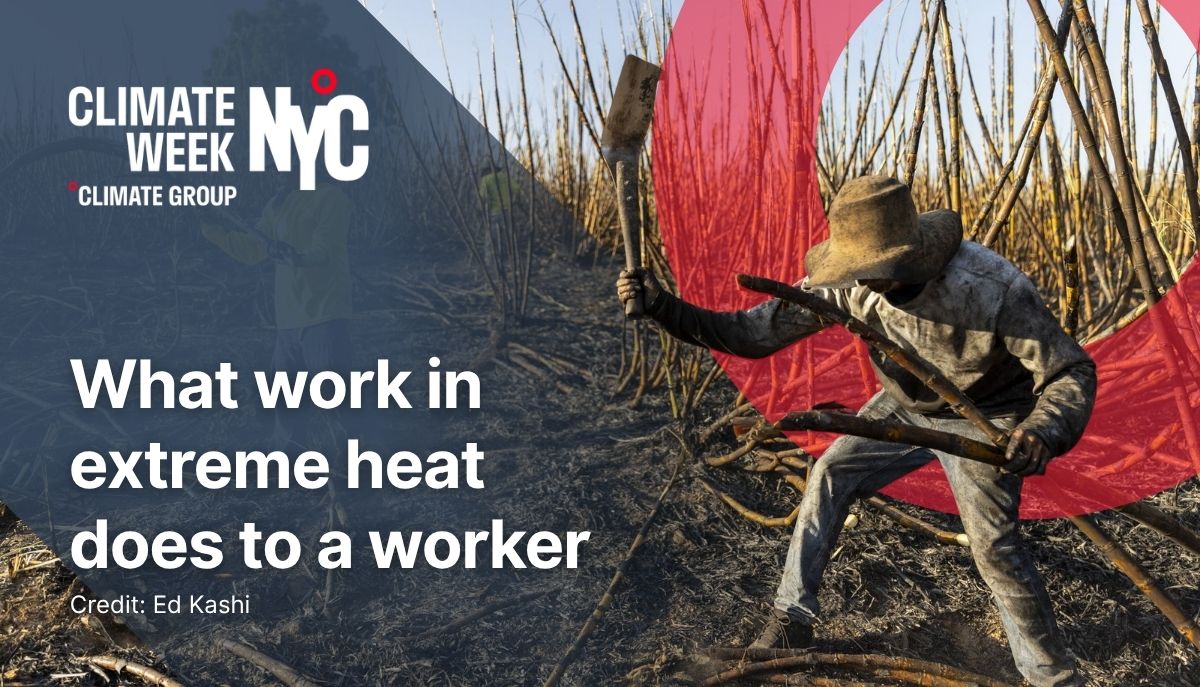
Somewhere this morning, a man swung a machete for the eight hundredth time before the sun was fully up. By the end of the harvest his kidneys may work measurably less well than they did in January. He will not feel it happen. Kidney injury does not hurt the way a broken arm hurts, which is most of the reason it has gone unaddressed for so long.
That is the problem we work on.
During Climate Week 2026, several thousand people will gather in New York, and a good number of them will spend it establishing that extreme heat is dangerous for people who work outdoors. And it is.
La Isla Network has spent nearly two decades measuring how dangerous heat can be in sugarcane, in construction, and in garment supply chains.
But we think that is no longer the open question, and we would rather spend the week on the one that is: what are we doing today to implement and evaluate OSH protections that protect workers’ lives and generate a visible return?
What La Isla Network Does
We measure what work in extreme heat does to workers’ bodies, redesign the job with the employer, and go back to measure whether it worked.
The third part is what makes La Isla Network unique in this space. Plenty of organizations will assess a worksite and write recommendations. Almost nobody goes back a year later to find out whether they were followed and whether the workers are any better off. That is what we built this organization around, and it is why our findings get accepted by regulators, insurers, and companies.
The Weather is One-Half of the Exposure
Here is the finding we most want people to carry out of the week.
What harms a worker is heat and workload together, and both halves are measurable.
The heat half has a usable dose-response. Each additional degree Celsius of WBGT was associated with an 18% higher same-day rate of clinically diagnosed acute kidney injury. That is a number a standard can be written against.
The workload half sorts the risk more sharply again. Among 545 fieldworkers we followed in our Nicaraguan cohort, grouped by how physically hard their job was, incident kidney injury was 2% in the low-to-moderate workload roles and 27% in the very-high-workload category. Same sites, same weather, same days.
So a standard written on temperature alone is not wrong about temperature. It is incomplete, and it will miss the people most at risk while appearing to work, because workload varies enormously between two people standing fifty feet apart.
It Works, and It Does Not Cost Productivity
At the Ingenio San Antonio sugar mill in Nicaragua, incident kidney injury among burned cane cutters, the hardest job on the site, fell from 21% to 1% across four harvests, 2017-18 to 2020-21.
The intervention consists of access to cooling rest that is scheduled and required, hydration, and safe and sanitary restrooms.
We measured worker productivity and found that it rose. Across five harvests, 2017 to 2022, it was up 19% among seed cutters and 9% among burned cane cutters, with shorter days and more breaks. An economic analysis published in Annals of Global Health last November, co-authored by our own staff, found the program turned a positive return on investment three years after implementation, and that by 2022 every $1.00 invested returned $1.60.
That is why the change endured. A protection that costs the employer nothing to keep is still there after we leave. The International Labour Organization has recognized La Isla Network’s Adelante Initiative as an exemplary workplace program addressing heat stress prevention.
The Question That is Actually Open
The causal science is largely settled. Heavy work in heat injures kidneys, the damage frequently does not reverse, and we know which controls prevent it.
What does not exist in any usable form is guidance, an agreed account of what adequate protection looks like. Which requirements are attainable rather than aspirational? How do we verify that what was promised was delivered?
That gap is where good intent stalls. A company that wants to do the right thing has nothing to implement against. A ministry writing a standard has nothing it can defend against challenge from industry, from unions and from its own legal service. And we should work with companies to write rules that will protect their workforce and generate a measurable return on its investment.
Our team began that work with a roadmap to effective and attainable workplace heat standards, published in Occupational and Environmental Medicine. Finishing it is the piece that still needs funding, and it is the conversation we most want to have next week.
Where We Will Be
On Tuesday September 22, La Isla Network CEO Jason Glaser is chairing Advancing Heat Resilience: Protecting Workforces, Building Businesses at the World Economic Forum’s Sustainable Development Impact Meetings. The Forum’s Workforce Heat Resilience Roadmap and its Solutions Repository launch inside that session. It is invitation-only, so if that is your world, the tools will be the part you can use.
He is on the panel at Harvard @ Climate Week NYC, “Extreme Heat: The Latest Research and What Comes Next,” on Tuesday afternoon, September 22, at Vanderbilt Chelsea Square on West 21st Street, hosted by the Salata Institute. That one is open, and it is the one to come to. Details and registration are on the event page.
If you are in New York and you work on any part of this, whether you buy from these supply chains, insure them, regulate them or fund the research, come and find us. If you cannot make it, write to me and I will send you the papers with their DOIs. That offer is standing, not just this week.
Nobody should lose their health to a day’s work. We can prove they do not have to.
About La Isla Network
La Isla Network is an independent occupational health research organization. We measure what work in extreme heat does to workers’ bodies, redesign the job with the employer, and go back to measure whether it worked. We work with workers, employers, universities and governments to turn that evidence into protections that are practical, enforceable and still in place after we leave. For more information, please reach out using the contact form.