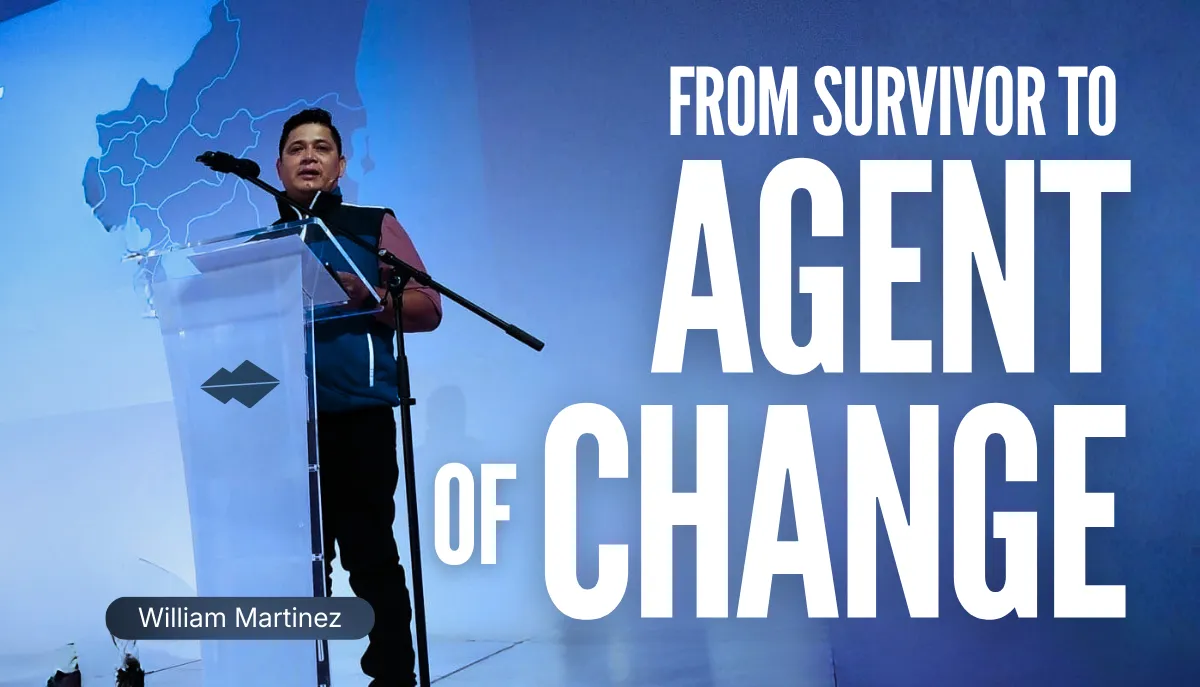
When William Martinez was 12 he joined the sugarcane cutters in Chichigalpa, Nicaragua — the same community where men routinely worked 10–12 hour days under a scorching sun, with little water, no shade and no rest. What began as a way to support his family quickly became a fight for survival. Friends, cousins and colleagues began falling ill and dying from a mysterious chronic kidney disease (CKD). “We cut cane, we get sick, and we die,” William says — a phrase that shaped an entire generation.

William’s father died at 43. Before he died, he left William with a short but life-changing message: “Study, so you don’t end up like me.” William did. He earned a degree in industrial engineering with a focus on occupational health and returned to the fields — this time as a changemaker instead of a cutter.
Working in occupational health, William joined forces with La Isla Network and partners to design practical workplace solutions based on four pillars: Rest, Shade, Hydration and Hygiene (RSH-H) — the Adelante Initiative. At Ingenio San Antonio (ISA), the initiative was piloted and measured.
The outcomes were striking: over three harvests the percentage of cutters with kidney injury fell from 21% to 1%; hospital visits for dehydration and heat-related acute kidney injury dropped by more than 80%; productivity increased 9–19% despite more breaks; and the company realized a 60% return on investment. Workers returned home healthier. Children stayed in school. Communities that had lived in constant mourning began to feel hope again.
William shared his personal and professional journey on the EPICOH 2025 stage in October 2025, calling on scientists, companies and worker advocates to multiply the impact of prevention. “What I saw in my community is not unique,” he told attendees. “Extreme heat does not distinguish between country, language, or industry. But we can break that cycle.”
Today William works across Nicaragua and in countries across Central America implementing Adelante and advising on heat-risk prevention. “There is nothing more rewarding than knowing that what we do saves lives,” he says. William’s story is proof that applied science, worker-company partnership and simple, evidence-based changes at work can turn a death sentence into a path for thriving communities.
Want to help scale life-saving prevention to more communities facing heat-driven occupational risk? Donate to the Adelante Initiative and help protect workers worldwide.