








Invited Speakers

Gregory Wilson
Gregory Wilson maintains research and teaching interests in modern United States history, especially public history, political economy, environmental history, and Ohio history. Most recently he is the author of Poison Powder: The Kepone Disaster in Virginia and Its Legacy (Series: Environmental History and the American South, University of Georgia Press, 2023). The book was a finalist for the Philip Reed Environmental Writing Award from the Southern Environmental Law Center. His other works include Ohio: A History of the Buckeye State (with Kevin F. Kern; Wiley-Blackwell, 2013; 2nd edition, 2023), Above the Shots: An Oral History of the Kent State Shootings (with Craig Simpson; Kent State University Press, 2016), and Communities Left Behind: The Area Redevelopment Administration, 1945 – 1965 (University of Tennessee Press, 2009). He is also one of the principal investigators for “Deindustrialization and the Politics of Our Time,” a $2.5 million transnational grant project funded through the Canadian Social Science and Research Council.

Iva Peša
Lecture: Pollution and Environmental Lifeworlds: Occupational Health and Environmental Wellbeing on the Zambian Copperbelt
Bio: Iva Peša is Associate Professor in Contemporary History at the University of Groningen. Between 2022 and 2027 she is the PI of the ERC Starting Grant AFREXTRACT, which studies environmental histories of mining and oil drilling in Johannesburg, the Zambian Copperbelt, and the Niger Delta. She studies how people made sense of (and responded to) environmental transformation.
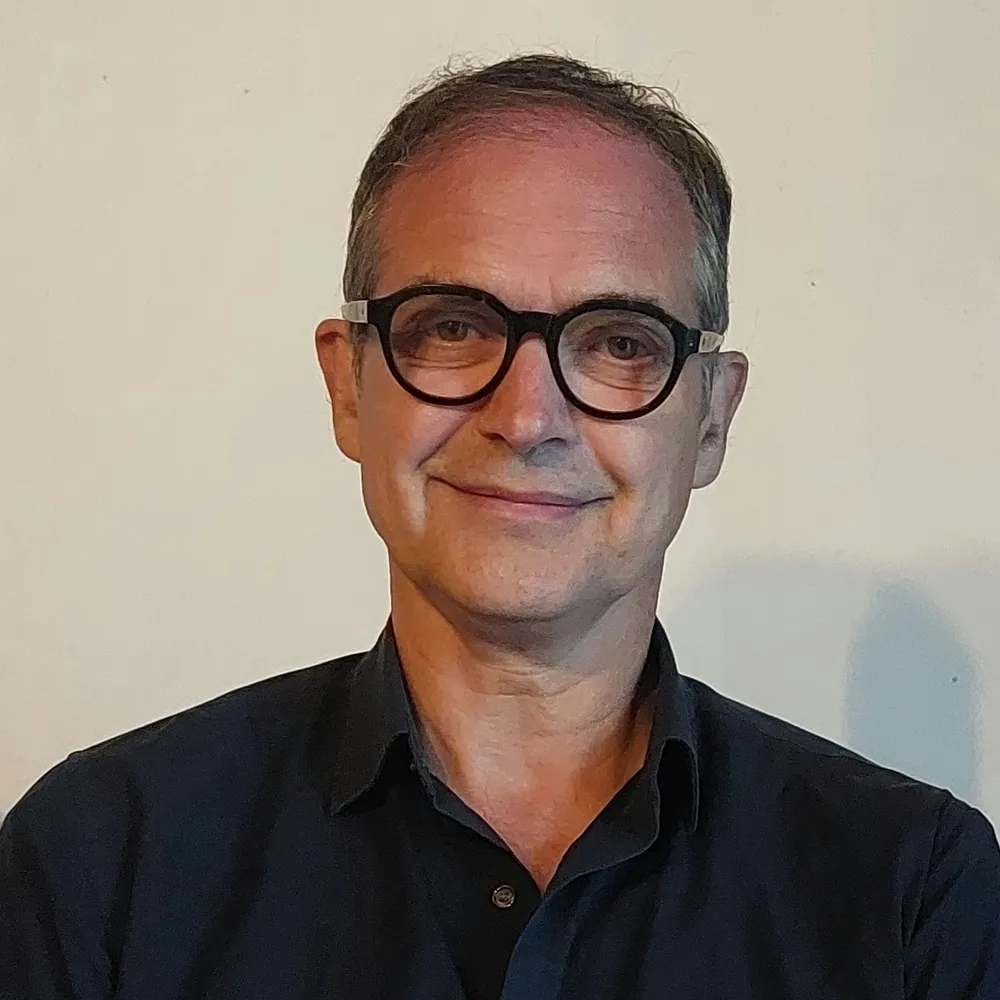
Bernard Thomann
Lecture: Mine worker studies of silicosis by medical and social experts in Japan from the 1920s through the 1960s
Bio: Bernard Thomann is a labor historian on 20th-century Japan. He is interested in the history of the recognition of occupational diseases, and has participated in international and comparative collective research programs on the history of silicosis and the relationship between precarious work and health. A full professor at the Institut national des langues et civilisation orientales in Paris, he has been a visiting researcher at the University of Tokyo, a visiting professor at the Tokyo University for Foreign Studies, and at Rikkyo University. He was French Director of the Maison franco-japonaise de Tokyo (2019-2023) and has been Director of the Institut français de recherches sur l’Asie de l’est (Inalco/Université Paris Cité/CNRS) since 2024.

Judith Rainhorn
Lecture: How Industrial Work Democratized Beauty and Its Toxic Burden. A Tale of Colour and Poison in 19th-Century European Cities.
Bio: A Senior member of the Institut universitaire de France, Judith Rainhorn is a Professor in Modern History at Université Paris 1 Panthéon-Sorbonne (Centre d’histoire sociale des mondes contemporains) where she holds the Health&Social Science Research Chair. Her research interests include the history of medicine and health, environmental, urban, and labour history in France, Europe and the United States, on which she has published extensively.
Judith’s most recent research deals with the history of industrial poisons and occupational diseases in 19th-20th centuries. Her 2019 book Blanc de plomb. Histoire d’un poison légal (Presses de Sciences Po) was awarded three academic prize and an English version is forthcoming at White Horse Press (2026).
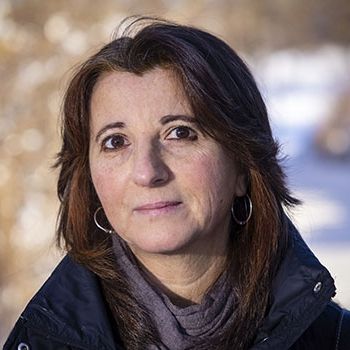
Stefania Barca
Lecture: The invisible labours of the Great Acceleration (1950 to present): housework and the struggle against industrial toxicity
Bio: Stefania Barca is an internationally renowned environmental historian and feminist political ecologist, who specializes on the nexus between labour and ecology in the industrial age. She is currently an associate professor at the University of Santiago de Compostela, and PI at the Interuniversity Center for Atlantic Lanscapes and Cultures (CISPAC) in Galicia (Spain). Her most recent book, Workers of the Earth. Labour, ecology and reproduction in the age of climate change (Pluto Press 2024), collects transnational research she has developed along two decades on workers’ vulnerability and resistance to industrial toxicity in the Great Acceleration era (1950 to present). She coordinates the international Just Transition and Care network, that she initiated in 2021 while serving as invited professor in Climate Change Leadership at the University of Uppsala, which develops policy recommendations for ecological transition based on the experience and perspective of care workers.
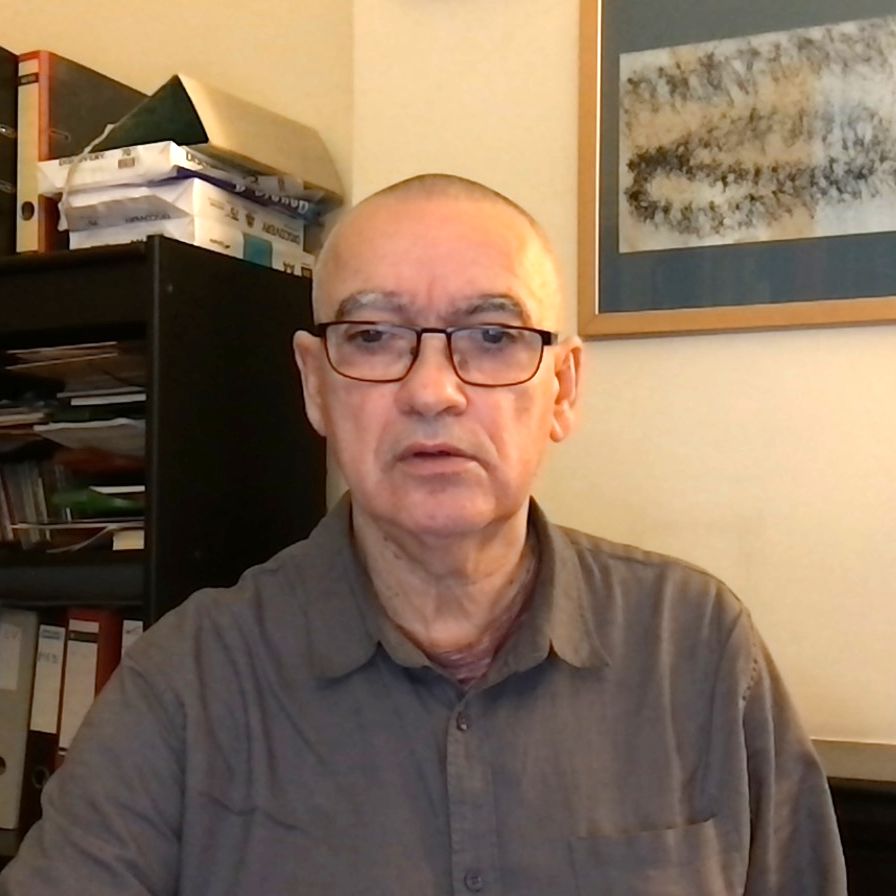
Laurent Vogel
Bio: Laurent Vogel was director of the Working Conditions, Health and Safety Department of the European Trade Union Institute (ETUI), the research and training centre of the European Trade Union Confederation (ETUC), from 2008 to 2013. In addition, he is emeritus professor of law at the Free University of Brussels (Université Libre de Bruxelles) where he taught occupational health law.